


Understanding Our Environment: The Foundation of a Sustainable Future
Understanding Our Environment
The environment is not something that exists separately from human life. It is the complete natural system within which we are born, grow, work and survive. The air we breathe, the water we drink, the soil that produces our food, the trees that regulate temperature and the countless living organisms around us are all parts of our environment.
Yet modern life often creates the illusion that humanity stands above nature. Cities expand, industries grow and technology advances, but every aspect of human progress still depends upon healthy natural systems.
Understanding our environment is therefore not merely an academic subject. It is the first step towards protecting life itself.
What Is the Environment?
The environment includes all the living and non-living conditions that surround and influence life.
It can broadly be understood through four interconnected components:
1. The Atmosphere
The atmosphere is the layer of gases surrounding the Earth. It provides oxygen, regulates temperature and protects living beings from harmful solar radiation.
Air pollution, excessive greenhouse-gas emissions and the destruction of forests are disturbing this delicate atmospheric balance.
2. The Hydrosphere
The hydrosphere includes oceans, rivers, lakes, wetlands, groundwater, glaciers and all other forms of water.
Water sustains every known form of life. However, pollution, over-extraction, wetland destruction and careless consumption are placing freshwater resources under increasing pressure.
3. The Lithosphere
The lithosphere is the solid outer part of the Earth, including rocks, minerals and soil. It provides land for forests, agriculture, settlements and natural habitats.
Healthy soil is a living resource. Excessive chemicals, erosion, construction, mining and waste dumping can severely reduce its fertility and ecological value.
4. The Biosphere
The biosphere contains all living organisms—plants, animals, microorganisms and human beings. These organisms interact with air, water and soil to form ecosystems.
No species lives entirely alone. Even the smallest organism can perform an important function within the larger web of life.
Why Is the Environment Important?
A healthy environment provides essential services that are often taken for granted.
Nature:
- Produces oxygen and absorbs carbon dioxide
- Regulates rainfall, temperature and climate
- Purifies air and water
- Maintains soil fertility
- Supports agriculture and food production
- Provides medicines, fibres, timber and other resources
- Offers habitats to plants, animals and microorganisms
- Reduces the effects of floods, heat and soil erosion
- Supports physical, emotional and spiritual well-being
The economy also depends upon nature. Agriculture, fisheries, forestry, tourism, construction, medicine and numerous industries rely upon functioning ecosystems and natural resources.
Environmental protection is therefore not opposed to development. It is the foundation upon which lasting development must be built.
Understanding Ecological Balance
An ecosystem is a community of living organisms interacting with one another and with their physical surroundings.
A forest, pond, river, grassland, wetland or even a garden can function as an ecosystem. Each contains producers, consumers and decomposers that maintain the circulation of energy and nutrients.
For example:
- Plants capture sunlight and produce food.
- Herbivores depend upon plants.
- Predators help regulate animal populations.
- Bees, butterflies and other insects support pollination.
- Earthworms and microorganisms improve the soil.
- Decomposers return nutrients to the natural cycle.
When one part of this system is damaged, the effects may spread throughout the ecosystem. The disappearance of pollinators can affect plant reproduction and food production. The destruction of wetlands can increase flooding. The loss of trees can intensify heat, erosion and water scarcity.
Ecological balance does not mean that nature never changes. It means that natural systems retain the diversity and resilience needed to adapt and continue functioning.
Major Environmental Challenges
Climate Change
Rising greenhouse-gas concentrations are influencing temperatures, rainfall patterns, sea levels and extreme weather. India is particularly vulnerable because of its long coastline, large population and dependence upon agriculture.
Climate action must combine cleaner energy with forest protection, water conservation, sustainable agriculture and climate-resilient communities.
Air Pollution
Vehicle emissions, industrial activity, construction dust, waste burning and certain household fuels contribute to poor air quality. Air pollution damages human health while also affecting plants, soil, water and wildlife.
Water Pollution and Scarcity
Untreated sewage, industrial discharge, agricultural chemicals and plastic waste contaminate rivers, ponds and groundwater. At the same time, excessive withdrawal and loss of natural recharge areas are creating shortages.
Protecting water requires both pollution control and the restoration of ponds, wetlands, rivers and groundwater-recharge systems.
Deforestation and Habitat Loss
Forests are often cleared for construction, infrastructure, agriculture and commercial activity. This destroys habitats, weakens water cycles and brings wildlife into greater conflict with human settlements.
Plantation is valuable, but planting trees cannot fully replace a mature natural forest. Existing forests and native biodiversity must receive priority protection.
Waste and Plastic Pollution
The growing volume of disposable products has overwhelmed many waste-management systems. Plastic enters drains, rivers, agricultural land and oceans, where it can persist for decades.
Reducing unnecessary consumption is more effective than depending entirely upon recycling after waste has already been produced.
Loss of Biodiversity
Habitat destruction, pollution, invasive species, climate change and overexploitation are causing declines in many plant and animal populations.
Biodiversity is not limited to famous wildlife. Native grasses, insects, fungi, birds, reptiles and soil organisms are all part of environmental health.
How Human Health Depends on Environmental Health
Human health cannot be separated from the health of the natural world.
Polluted air can cause respiratory and cardiovascular illness. Contaminated water spreads disease. Chemical exposure can affect food safety, while extreme heat threatens workers, older people and children. Declining biodiversity may also weaken the natural systems that regulate pests and disease.
Access to trees and green spaces can improve mental well-being, encourage physical activity and reduce urban heat. Environmental conservation is therefore also a form of preventive healthcare.
The Indian Tradition of Respecting Nature
Indian civilisation has long recognised the interconnectedness of life. Rivers have been honoured, trees protected, animals respected and forests regarded as places of knowledge and spiritual reflection.
The idea that the Earth is not merely a commodity, but a living source of nourishment and responsibility, remains deeply relevant today.
However, cultural reverence must be expressed through practical action. Respect for a river has little meaning if waste is dumped into it. Worshipping trees must be accompanied by protecting forests and creating living green spaces.
Tradition becomes truly powerful when it inspires responsible behaviour in the present.
What Can Individuals and Families Do?
Environmental protection begins with ordinary daily decisions.
Plant and Protect Trees
Plant suitable native and climate-appropriate species, but also care for them after planting. A surviving tree is more valuable than many neglected saplings.
Create Green Spaces
Terrace gardens, balcony gardens, kitchen gardens and community plantations can reduce heat, support pollinators and reconnect families with nature.
Save Water
Repair leaks, reuse suitable household water, harvest rainwater and avoid unnecessary consumption. Gardens should be designed with water-efficient plants and irrigation practices.
Reduce Waste
Buy thoughtfully, avoid single-use products, compost biodegradable waste and separate recyclable materials at source.
Protect Local Biodiversity
Grow diverse plants that provide nectar, fruit, seeds and shelter. Avoid excessive pesticide use and provide safe water for birds and small animals.
Use Energy Responsibly
Switch off unnecessary electrical equipment, choose efficient appliances and use public transport, walking or cycling wherever practical.
Support Environmental Initiatives
Participate in local clean-ups, tree-care programmes, awareness campaigns and conservation projects. Encourage schools, institutions and businesses to adopt measurable environmental practices.
The Role of Communities and Institutions
Individual action is essential, but large environmental challenges also require collective responsibility.
Resident associations can establish waste segregation and rainwater harvesting. Schools can create biodiversity gardens and environmental clubs. Businesses can reduce plastic, conserve energy and support ecological restoration. Local authorities can protect water bodies, improve public transport and expand native urban greenery.
The greatest results emerge when citizens, institutions, scientists, businesses and government agencies work together.
Environmental Education Must Lead to Action
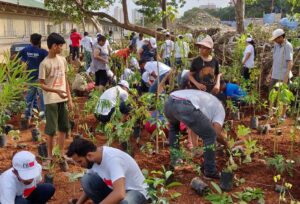
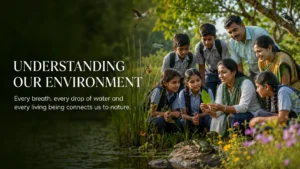
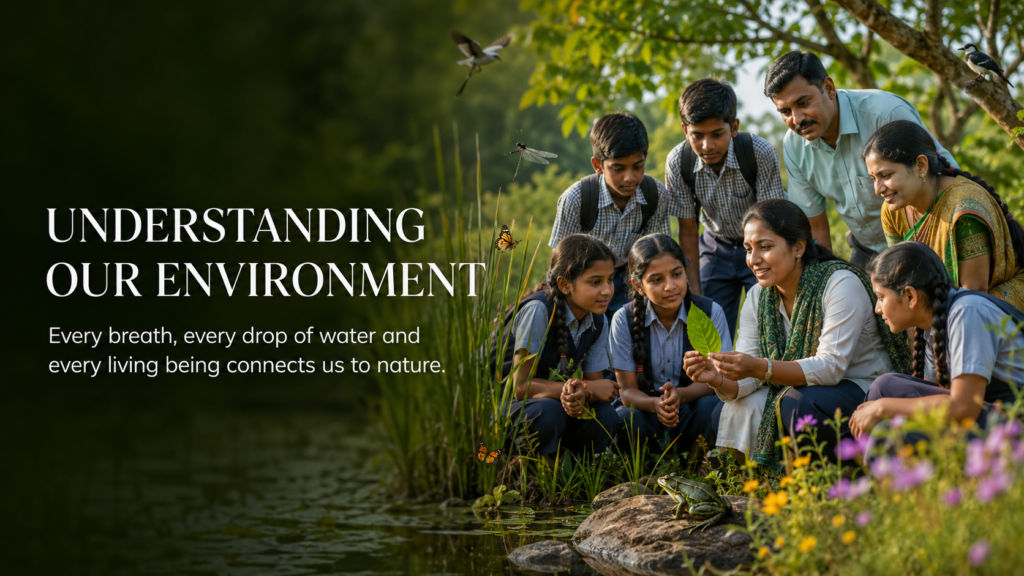
Children should not learn about the environment only through definitions and examinations. They should experience soil, seeds, trees, birds, insects and water systems directly.
Every school can develop:
- A small garden or native plant zone
- Composting and waste-segregation facilities
- Rainwater conservation activities
- Biodiversity observation projects
- Regular nature walks and plantation-care programmes
Environmental education becomes meaningful when knowledge develops into lifelong responsibility.
From Awareness to Environmental Responsibility
Understanding the environment reveals a simple truth: humanity is not outside nature. We are one part of an interconnected living system.
Every breath connects us with trees. Every meal connects us with soil, water, sunlight and pollinators. Every product we consume leaves an environmental footprint somewhere.
We may not solve every ecological problem individually, but each person can choose to become part of the solution. A protected tree, a restored pond, a composted kitchen waste basket or a child taught to respect life may appear small—but millions of such actions can transform society.
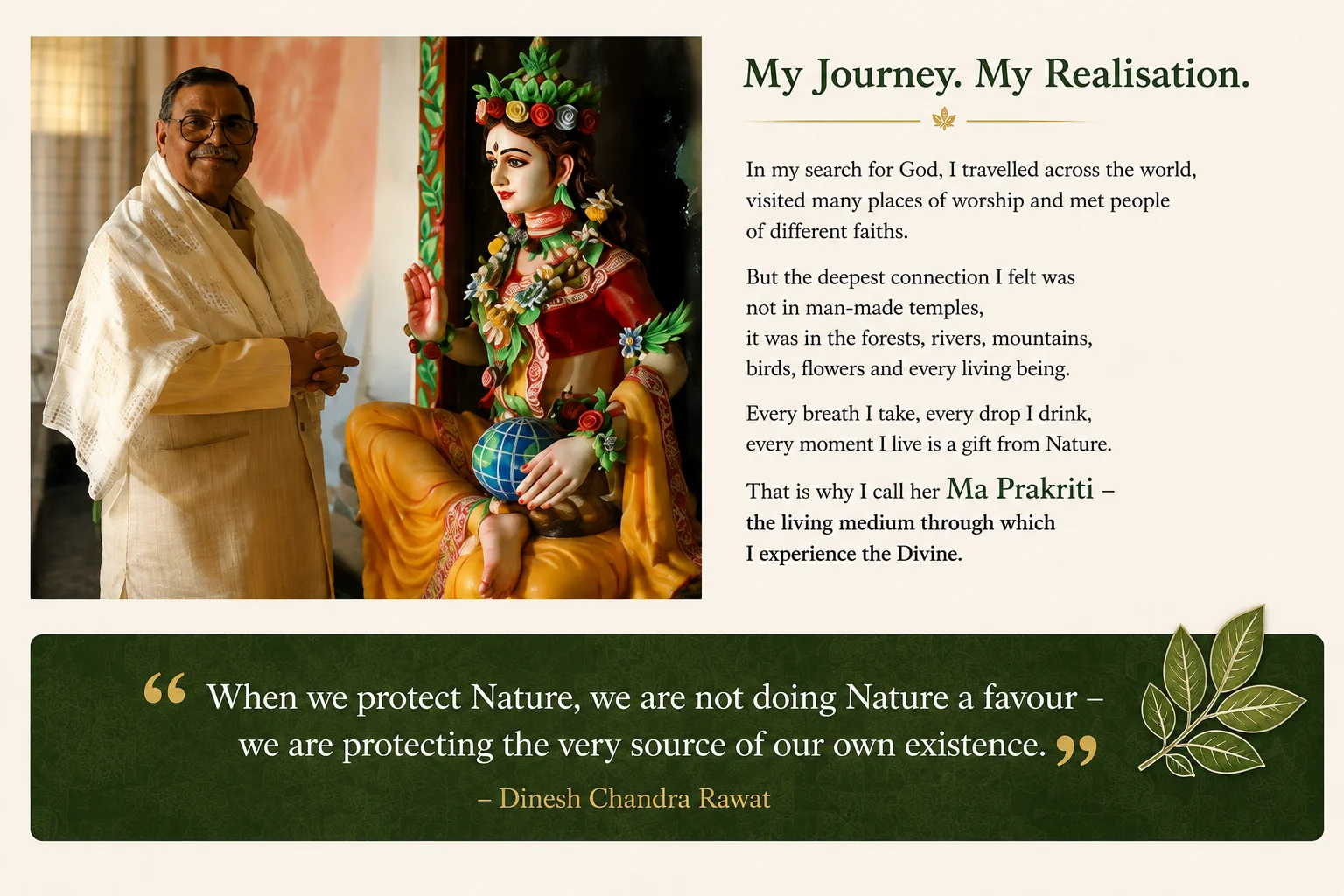
At Prakriti Bandhu Trust, we believe that caring for nature is both a shared responsibility and a service to future generations. Let us move beyond observing environmental decline and become true friends and protectors of Prakriti.
Frequently Asked Questions
What does “understanding our environment” mean?
It means recognising the relationship between living organisms and natural elements such as air, water, soil and climate, as well as understanding how human actions affect these systems.
Why is environmental awareness important?
Environmental awareness helps people make responsible choices, conserve resources, reduce pollution and participate in protecting ecosystems.
What are the main components of the environment?
The main components are the atmosphere, hydrosphere, lithosphere and biosphere.
How can students help protect the environment?
Students can conserve water, avoid disposable plastic, grow plants, segregate waste, protect animals and participate in environmental activities at school and within their communities.
Is planting trees enough to protect the environment?
Tree planting is important, but it is only one part of conservation. Existing forests, wetlands, soil, wildlife and water bodies must also be protected. Newly planted trees require long-term care.
What is the simplest environmental action to begin today?
Begin by reducing unnecessary consumption and waste. Then conserve water, care for at least one plant or tree and encourage another person to join you.